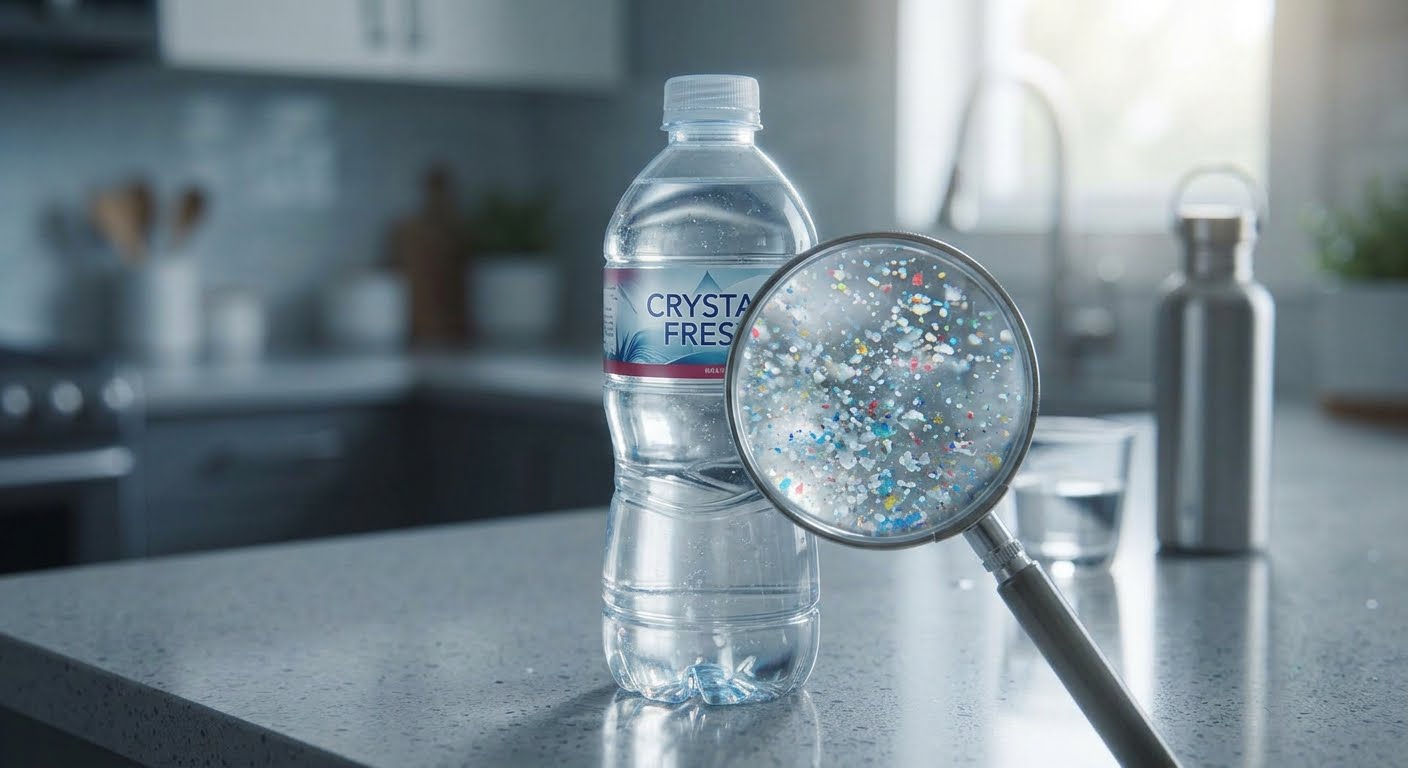
microplastic in water, what to do?
It is a known fact nowadays that plastic bottles release microplastics, here some interesting information on how to solve this problem, from this video: https://www.youtube.com/watch?v=6thC2S8CuWw
Optimizing gastrointestinal mechanics and leveraging natural digestive processes offers a simple method to bind and flush microplastics out of the body. Studies confirm that microplastics can be excreted through human stool, indicating that proper gut utilization and dietary strategies support elimination. Watch the video at YouTube.
Personally I distill water from plastic bottle water and I add a pinch of Hymalaian salt or another rock salt that I have here, depending on my personal taste.
Optimizing gastrointestinal mechanics and leveraging natural digestive processes offers a simple method to bind and flush microplastics out of the body. Studies confirm that microplastics can be excreted through human stool, indicating that proper gut utilization and dietary strategies support elimination. Watch the video at YouTube.
Le risposte dell'AI potrebbero contenere errori. Scopri di più
•
YouTube·Thomas DeLauer
They Found the Best Way to Detox Microplastics – And It's ...
3 lug 2025 — Consuming soluble fiber, such as from chia seeds and flax seeds, can increase this process as bile acids bind to soluble fiber, ai...
59s
Mostra tutto
Can you make a better summary a bit longer?
🌟 Core Takeaway
Optimizing your gut health is the most effective, science-backed defense against microplastic accumulation. [0:02:01 - 0:02:26] While nanoplastics and microplastics are entirely unavoidable in the modern environment—infiltrating our air, water, and vital organs—clinical evidence reveals they can be naturally trapped and excreted through our stool, heavily mitigating their systemic buildup [0:02:46 - 0:03:13, 0:03:56 - 0:04:12].
🛡️ The 3-Step Strategy to Flush Microplastics
1. Tighten the Gut Barrier to Block Absorption
Microplastics act like normal food particles in the digestive tract; the smaller the plastic particle, the easier it penetrates the intestinal wall into the bloodstream [0:02:33 - 0:02:46]. Keeping the "tight junctions" of your gut sealed prevents this absorption [0:03:13 - 0:03:26].
• What to add: Consume collagen, bone broth, and 3 to 5 grams of L-glutamine (every other day) to reinforce the physical integrity of the gut lining [0:03:26 - 0:03:42].
• What to avoid: Completely eliminate polysorbates and other chemical emulsifiers from your diet [0:04:18 - 0:04:30]. These additives strip away the gut's protective mucosal layer, sparking chronic, systemic immune inflammation [0:04:30 - 0:04:48].
• Lifestyle anchors: Keep physical stress low and avoid chronic over-exercising, as both physically degrade the gut barrier [0:05:14 - 0:05:21, 0:06:24 - 0:06:37].
2. Leverage Bile Acid Sequestration
Bile acids naturally bind to fat-soluble toxins in the digestive tract to carry them out of the body [0:05:30 - 0:05:42]. You can hijack this process to sweep up plastics [0:05:42 - 0:06:00].
• The binding mechanism: Consume high-quality soluble fibers like chia seeds and flax seeds [0:05:42 - 0:05:49]. Soluble fiber binds to bile acids, which in turn trap nano- and microplastics, pulling them cleanly through the intestinal tract [0:05:49 - 0:06:07].
• The flushing mechanism: Maintain aggressive hydration to optimize intestinal transit time and maximize the filtration and flushing efficiency of the bowels [0:06:00 - 0:06:24].
3. Prioritize Polyphenols over Heavy Roughage
Massive bowls of raw salad and heavy roughage can trigger gut irritation and IBS symptoms for many people [0:07:31 - 0:07:42]. Focus instead on nutrient density through vibrant, antioxidant-rich compounds [0:08:24 - 0:08:29, 0:08:58 - 0:09:06].
• Microbiome shift: Consume polyphenols from berries, fruits, and pure fruit extracts [0:07:42 - 0:07:49]. These function as powerful prebiotics and postbiotics that tilt the gut microbiome toward a highly anti-inflammatory state [0:07:49 - 0:08:03].
• Internal defense: Polyphenols actively trigger your body’s endogenous anti-inflammatory systems (such as superoxide dismutase and glutatione peroxidase) [0:08:03 - 0:08:16]. This systemic boost works directly to counteract cellular inflammation already caused by the plastics that have settled into your tissues [0:08:16 - 0:08:24].
🔍 Scientific Grounding
• The Total Environment Study: Revealed that 100% of human subjects tested had measurable microplastics in their stool, proving the gastrointestinal tract is our primary elimination pathway [0:02:11 - 0:02:33, 0:02:51 - 0:02:55].
• The International Journal of Pharmaceutics: Demonstrated that microplastic absorption directly correlates with particle size, underscoring the absolute necessity of maintaining a sealed, non-leaky gut barrier [0:02:33 - 0:02:46, 0:03:13 - 0:03:26].
--
The information presented in this story reflects the author’s personal experience or is drawn from archival material; it is not supported by universal clinical evidence.
The effectiveness of any product suggested in this article is not a substitute for conventional medical treatments.
For official health guidelines, please consult a qualified physician.