How nicotine works
I have come to know a very nice site about quitting smoking (whyquit.com) and this is the article about how nicotine works in our brain, I can say I pretty agree with it considering my experience of smoking, nicotine is a strong addiction that change our brain in a definite matter.
original link https://whyquit.com/whyquit/LinksAAddiction.html
"Nicotine Addiction 101
John R. Polito
What is Nicotine Addiction?
Nicotine is the tobacco plant's natural protection from being eaten by insects. Today, synthetic nicotine (neonicotinoids) is the world's most widely used farm crop insecticide and is being blamed for killing honey bees. A toxin, in animal studies, drop for drop, nicotine has proven to be as lethal as strychnine and three times deadlier than arsenic.
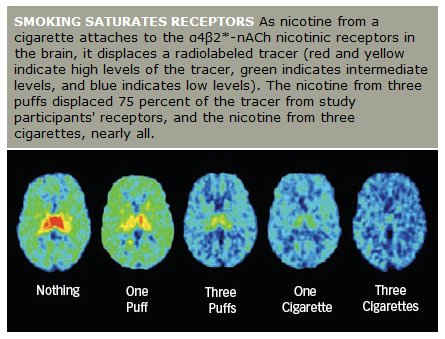
Yet amazingly, by chance, this natural insecticide's chemical signature is so similar to the neurotransmitter acetylcholine in size and polarity that once inside the human brain it fits a host of chemical locks permitting it direct and indirect control over the flow of more than 200 neuro-chemicals, most importantly dopamine.
What Are Dopamine Pathways?
Brain dopamine pathways
What is dopamine? It's hard to understand nicotine addiction, or any form of drug addiction for that matter, without a basic understanding of the brain's primary motivation neurotransmitter, dopamine. The brain's dopamine pathways serve as a built-in teacher. It uses a desire, yearning or wanting sensation to get our attention when it's time to pound home a survival lesson necessary to keep us humans alive and thriving.
Have you ever wondered why it's so hard to go without eating, to starve yourself to death, or for that matter, to die of thirst? Why do we seek acceptance by our peers, want companionship, and desire a mate or sexual relations? Why do we feel anxiety when bored and an "aaah" sense of relief when we complete a task?
Remember the very first time your parents praised you for keeping your coloring between the lines? Remember the "aaah" relief sensation you felt? That was dopamine, the satisfaction of your wanting to succeed. The deep inner primitive brain (the limbic mind) is hard-wired, via dopamine pathways, to keep us drinking liquids, fed, and together (there's "safety in numbers"), while achieving and reproducing.
When we feel hungry our dopamine pathways are being stimulated, teasing us with anticipation "wanting" for food. If kept waiting, the anticipation may build into urges or even full-blown craves. Each bite we eat further stimulates dopamine flow until stomach peptides, at last, tell the brain we're full and wanting becomes satisfied.
But our brain doesn't stop with simply creating and satisfying wanting associated with species survival events such as eating, drinking liquids, bonding, nurturing, accomplishment and sex. It makes sure that we don't forget them, that in the future we pay close attention to these activities.
The brain records how wanting was satisfied in the most durable, high-definition memory the mind may be capable of generating. It does so by hard-wiring dopamine pathway neuro-transmissions into our conscious memory banks (the prefrontal cortex - the lobe above our eyes), thus linking the event to wanting's satisfaction.
Referred to as "adaptive memory," dopamine flags motivationally significant events for long-term memory, thereby ensuring that they're protected and available to influence future behavior.
Drug Addiction's Common Thread
Now ponder this. What would happen if, by chance, an external chemical existed that once introduced into the bloodstream was small enough to pass through the blood/brain barrier (a protective filter), and once inside the brain was somehow able to stimulate or activate our mind's dopamine pathway circuitry? Could that chemical hijack the mind's priorities teacher?
If so, how long would it take before continuing use of the chemical resulted in the person becoming totally yet falsely convinced that using more of the chemical was as important as eating food?
The nicotine dependency feeding cycleHunger for food, hunger for nicotine. Food craves, nicotine craves. "Aaah" wanting satisfaction while taking bites, "aaah" satisfaction while replenishing nicotine reserves.
Addicted to inhaling an insecticide, welcome to the addict's world of nicotine normal, a world built on lies. For if we don't eat food we die, while if we stop using nicotine we thrive!
Clearly, I've vastly oversimplified an extremely complicated topic. While dopamine pathway stimulation is the common thread between chemical addictions (including cocaine, heroin, meth, nicotine and alcoholism), my simplified explanation does not explain why users initially continue using the drug prior to a growing pile of high-definition dopamine pathway use memories begin begging them to use more. Nor does it explain why most regular nicotine users get hooked but not all, or why quitting is often accompanied by withdrawal symptoms.
Although enhanced dopamine flow is associated with all chemical addictions, each chemical differs in how it triggers or enhances stimulation, how long stimulation lasts, and each chemical's ability to produce a different "high" sensation by interacting with other neurochemicals and pathways.
Aside from enhancing dopamine flow, nicotine is a central nervous system stimulant. As such, it activates the body's fight or flight response. This results in an alert-stimulated high. This allows us nicotine addicts to feel different or even superior to illegal drug addicts who fill the world's prisons. This, even though last year addiction to smoked nicotine killed 6.8 times as many Americans as all illegal drugs combined (480,000 versus 70,630).
While nicotine stimulates the nervous system, alcohol has the opposite effect in actually depressing it and slowing normal brain function. Heroin's dopamine stimulation is accompanied by an endorphin high, resulting in a short yet intense numbing or analgesic effect. Cocaine's high is a sense of stimulated euphoria associated with delaying normal clean-up (re-uptake) of multiple neurotransmitters (dopamine, serotonin and nor-adrenaline). And methamphetamine is the maximum speed stimulant.
A pack of cigarettes showing Canadian cigarette pack addiction warning since 2000Again, the common thread between each of these addictions is that the brain's dopamine pathways were taken hostage and left the addict totally yet falsely convinced that continuing drug use was important to their survival, that their drug gave them their edge, helped them cope, and that life without it would be horrible.
What we nicotine addicts could not see was that our beliefs and thinking about that next fix were unworthy of belief. The way to end wanting wasn't to use again. In fact, that is the only way to guarantee that wanting never ends.
Once hooked, it was too late. High-definition pay-attention memories generated by our dopamine pathways were now so vivid and durable that they quickly buried all remaining memories of life without nicotine. Gone were our pre-addiction memories of the calm, quiet, and beauty of the mind we previously called home.
It's why getting off of drugs is so difficult. It's why half of the smokers we see each day will eventually smoke themselves to death. While their friends and loved ones scream the insanity of their continued self-destruction, their brain dopamine pathways scream even louder that continuing drug use is as important as life itself.
Who should they believe, their limbic mind begging for that next fix or the outside world begging them to stop?
Nicotine Dependency is a Mental Illness
College student holds sign declaring addicted to smoking nicotineI'm sorry but there's simply no nice way to say this. Nicotine dependency, like alcoholism, is a real mental illness. While able to fully and comfortably arrest our chemical addiction, there is no cure. It's permanent.
Like alcoholism, there's just one rule. Once we're free, just one, using just once and we have to go back. You see, it isn't a matter of how much willpower we have, but how the brain's priorities teacher teaches, how nerve and memory cell highways that recorded years of nicotine feedings have left each of us grooved and wired for relapse.
So why are some people social smokers able to take it or leave it, while the rest of us got hooked? Referred to as "chippers," they probably account for less than 10% of all smokers. Jealous? If so and still using, don't worry, it's normal. That's what enslaved brains tend to dream about, to want to become like them, to control what for us is uncontrollable.
Being immune to addiction is believed to at least in part be related to genetics. But with up to 90% of daily users hooked solid under DSM standards, spending millions studying nicotine dependency genetics seems almost laughable. Before feeling too sorry for yourself, imagine what it's like to be an alcoholic and be forced to watch roughly 90% of drinkers do something that you cannot, turn and walk away. We only have to watch the 10% who are chippers.
Then again, we were each once chippers too, at least for our first couple of cigarettes, vaping sessions, or oral tobacco uses. There was no urge, desire, craving, hunger or wanting for those first couple of smokes. Nicotine stimulated our nervous system without our brain begging us to come back and do it again. There was no dopamine "aaah" relief sensation, as nothing was missing and nothing in need of replenishment. But that was about to change."
--
The information presented in this story reflects the author’s personal experience or is drawn from archival material; it is not supported by universal clinical evidence.
The effectiveness of any product suggested in this article is not a substitute for conventional medical treatments.
For official health guidelines, please consult a qualified physician.